
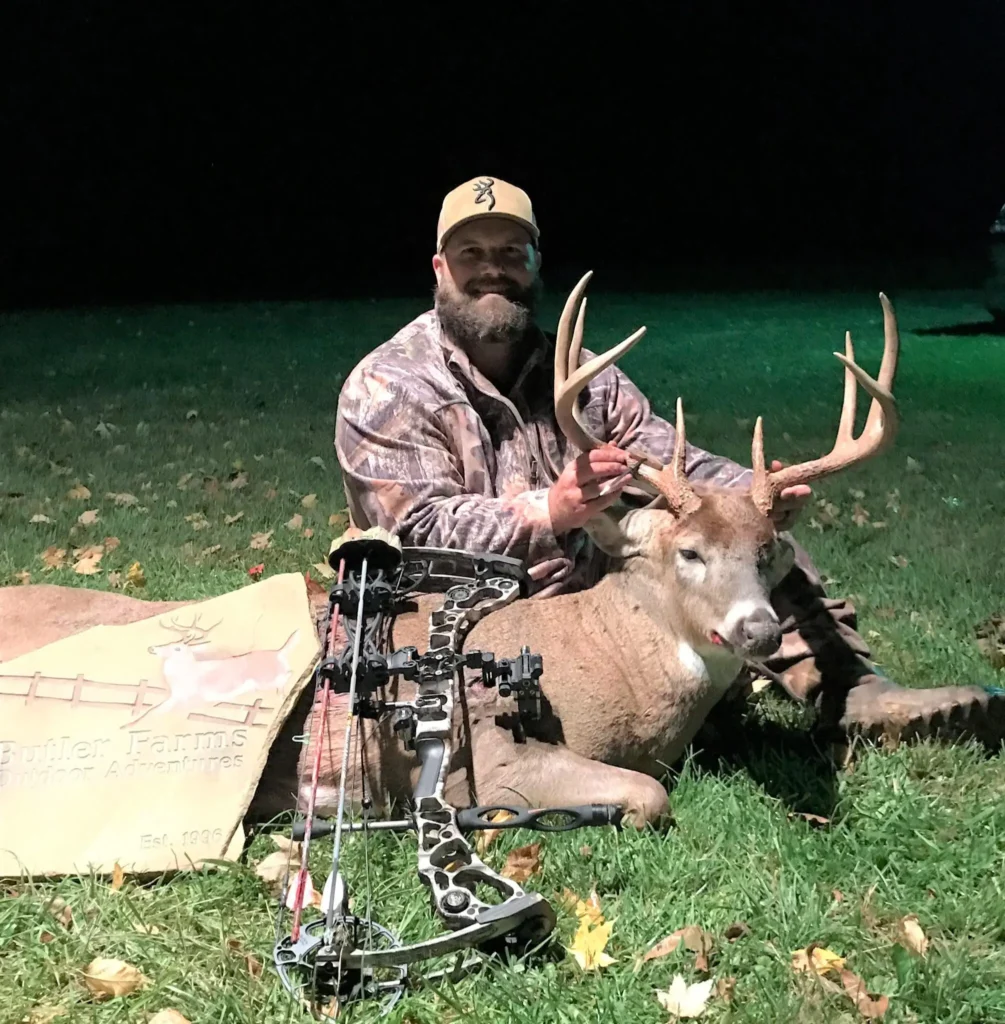
Not every memorable moment in deer country ends with a harvest. Some of the most useful lessons are the quiet observations you make along the way.
A change in the wind. A trail you did not notice at first. Deer activity along a field edge just before dark. Those details can be easy to remember while you are still in the woods—and surprisingly easy to forget once you are back home.
For hunters who enjoy a do-it-yourself whitetail trip, a small hunting journal is a practical way to keep those observations organized. It does not require special software or a complicated spreadsheet. A pocket notebook or a note on your phone will do.
Here are five details worth recording during a self-guided deer hunt in Pike County, Illinois, and anywhere else you spend time observing whitetails.
1. The Conditions at the Start of Your Sit
Begin with the date, approximate start and finish times, and the general location of your setup. Add the temperature, precipitation, and wind direction you experienced—not just what the forecast predicted.
Wind direction is especially helpful when reviewing your notes. Weather forecasts describe wind by the direction it comes from, so a north wind is blowing toward the south. The National Weather Service’s forecast terminology can help you interpret weather reports consistently.
The goal is not to find a perfect weather formula. It is to remember the conditions surrounding the observations you actually made.
2. Your Route In—and Your Route Out
A promising location is only one part of a practical setup. How you reached it also matters. Note the path you used, whether it was noisy or difficult to travel, and whether you noticed deer or other wildlife reacting as you moved.
On a designated private hunting tract, make sure any route or alternate setup stays within the property boundaries and access arrangements established with the outfitter. Illinois requires permission to hunt on another landowner’s property; the Illinois Department of Natural Resources explains the importance of private-land permission.
Sometimes your most useful entry in the journal is simply a reminder to choose a quieter or more practical way in next time.
3. Sightings and Deer Sign—Kept Separate
Write down what you saw before recording what you think it means. A deer sighting, a track, a rub, and a scrape are different kinds of information. All are worth noting, but none should be treated as a guarantee of future movement.
For example, record the approximate time and direction of a sighting, and describe where a rub or scrape was located. State wildlife agencies use these features when explaining deer scouting; the Indiana DNR’s deer scouting guide provides a helpful overview of deer trails, feeding and bedding areas, rubs, and scrapes.
Keeping observations separate from assumptions helps you notice patterns without turning one interesting moment into a sweeping conclusion.
4. Changes in the Land Around You
Pike County’s farm-and-woodland landscape has a character of its own. At Butler Farms Outdoor Adventures, the property includes crop fields, woods, pastures, creeks, and other rural habitat. The view from a particular spot may change as leaves fall, fields are harvested, or weather conditions shift.
A quick note about visibility, field conditions, or fresh activity along an edge can be useful later. You do not need to explain why the deer behaved a certain way; simply record what changed and what you observed.
5. One Lesson for Your Next Sit
Before you close your journal, write one sentence about what you would keep the same or change. That might mean reviewing a different wind direction, revisiting your entry route, or spending more time observing before deciding where to set up.
Not every hunt needs an adjustment. Sometimes the most valuable lesson is patience—and sometimes the right decision is to leave an area undisturbed.
A Five-Minute Hunting Journal Template
Keep it simple: Date and location: ____ Time: ____ Weather and wind: ____ Entry and exit route: ____ Deer sightings and sign: ____ Land or habitat changes: ____ One lesson for next time: ____.
A few honest sentences are more useful than pages of guesses. If you did not see deer, record that too. A journal is a record of the experience, not a report card.
Bring That Curious Mindset to Butler Farms
At Butler Farms Outdoor Adventures, our self-guided whitetail hunts are designed for hunters who value independence and time on their designated private tract. The experience gives you room to observe, make decisions, and enjoy the Illinois countryside at your own pace.
Whether you are planning your first DIY archery trip or returning to the woods with years of experience, keeping field notes is one easy way to make the most of what each day teaches you.
Interested in learning more about DIY whitetail hunting and lodging in Pike County, Illinois? Contact Butler Farms Outdoor Adventures or call (217) 723-4451 to discuss the hunting experience, arrangements, and availability. Confirm current Illinois regulations and permits with IDNR before traveling.
Where hunting is still a sport.